From Dock to Door: How a Modern Loading Unloading Conveyor Transforms Throughput and Safety
DorothyPWashington,
What a Loading Unloading Conveyor Does—and Why It Matters for Today’s Logistics
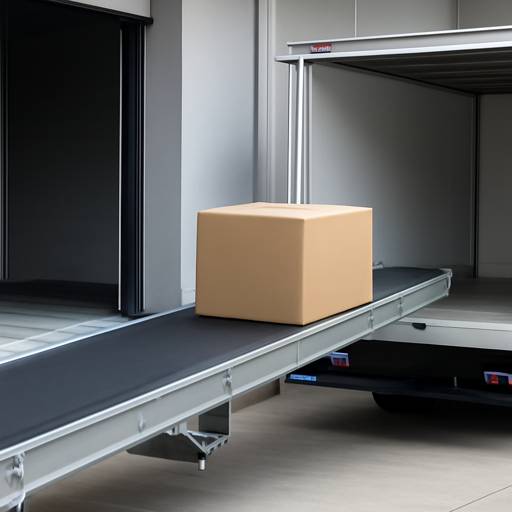
A loading unloading conveyor is purpose-built to bridge the gap between a facility’s internal material flow and the unpredictable realities at the dock. Unlike fixed in-plant lines, these systems extend into trailers, containers, or vans, bringing the conveyor to the cargo rather than forcing teams to push, pull, and carry goods across long distances. By reducing manual travel, touches, and awkward lifts, a well-specified loading unloading conveyor accelerates cycle times, protects workers, and reduces product damage.
At its core, a system may combine a telescopic belt or roller boom with height adjustment, variable speed control, and safety features like emergency stops and anti-collision sensors. Articulated sections negotiate trailer sills, while powered in/out motion helps operators “walk” the nose of the conveyor deeper into a container. In high-throughput environments—think express parcels, cross-border shipments, or omnichannel fulfillment—these capabilities translate into measurable gains: more parcels per hour, faster truck turns, and reduced queueing at doors.
Ergonomics is often the most overlooked advantage. Manual loading requires repetitive bending, reaching, and twisting in poorly lit, confined spaces. A modern loading unloading conveyor presents cartons, sacks, or totes at an optimal working height and distance, helping teams maintain a neutral posture. Integrated LED task lighting, anti-fatigue platforms, and intuitive controls further reduce strain. Fewer workers are needed to achieve the same—or greater—throughput, and the work itself becomes more sustainable, lowering turnover during peak seasons.
Reliability and maintainability are equally critical. These systems face dust, moisture, temperature fluctuations, and constant impacts at the truck interface. Robust frames, protected cabling, IP-rated components, and quick-change wear parts (belts, rollers, bearings) minimize downtime. With variable frequency drives and soft-start/stop logic, delicate goods experience less shock, and energy consumption drops. Many sites now integrate booms with WMS/WCS platforms, using photo-eyes for gap control, barcode readers for real-time visibility, and sensors that pace the line to eliminate choke points. As networks expand and service promises tighten, the loading unloading conveyor has evolved from a nice-to-have accessory to a strategic asset that anchors dock productivity.
Features, Configurations, and How to Choose the Right Loading Unloading Conveyor
Not all docks—and not all loads—are alike. Choosing the right loading unloading conveyor starts with understanding freight profile, trailer mix, working height, and target throughput. Telescopic belt conveyors excel with cartons, polybags, and totes, enabling long reach into 40’ containers and delivering smooth, continuous flow. Motorized roller (MDR) booms shine where zero-pressure accumulation is needed to maintain gaps for scanning or dimensioning. Gravity roller extensions offer an economical solution for occasional handling or as a buffer stage to powered units. For heavy or irregular loads, chain or slat options provide positive drive with higher load ratings.
Adjustability is key. Multi-stage telescopic booms with powered elevation adapt to dock heights, yard trucks, and container floor irregularities. Articulating “nose-over” sections address last-meter alignment, helping operators maintain an ergonomic pick face. Look for variable speed ranges that support both delicate handling and rapid bulk moves, and consider reversible operation for quick swaps between loading and unloading.
Safety should be built in, not bolted on. Essential features include guarded pinch points, mushroom E-stops within easy reach, anti-collision bumpers on the boom tip, audible/visual alarms during extension, and anti-rollback devices on mobile bases. For light-sensitive or high-traffic docks, photo-eye arrays can halt motion when a person or obstruction is detected at the trailer throat. Integrated task lighting, low-glare indicators, and non-slip surfaces reduce incident rates and improve operator confidence. These measures align with CE, UL, and other regional compliance frameworks and are increasingly non-negotiable in audits.
Energy and maintenance considerations drive total cost of ownership. High-efficiency motors, VFDs, and automatic sleep modes cut idle consumption. Modular design with hinged access panels, tool-less belt tensioning, and quick-release rollers accelerates PM routines. Many new systems offer IoT diagnostics: run-time counters, thermal monitoring, and predictive alerts delivered to maintenance teams reduce surprises. When evaluating ROI, weigh the savings across labor, damage reduction, truck dwell time, and space utilization. In seasonal peaks, a scalable solution—multiple mobile booms that share one dock lane, or fixed booms paired with mobile “feeder” conveyors—can flex capacity without a permanent footprint.
Integration also matters. A modern loading unloading conveyor can handshake with scanners, weigh-in-motion scales, and dimensioning systems to capture shipment data at the door. Smart pacing controls meter product into sorters or robotic cells, preventing jams downstream. For cross-border operations where carton sizes, packaging quality, and truck standards vary widely, robust chip-resistant belts, impact plates, and reinforced frames preserve uptime. The goal is a cohesive dock ecosystem where every second and every movement serves the flow.
Real-World Scenarios: Designing for Throughput, Space, and Seasonality
Consider a high-velocity parcel terminal receiving a steady stream of 12-meter trailers. Before modernization, teams of four needed roughly 45 minutes per truck to hand-load mixed cartons. With a telescopic belt loading unloading conveyor equipped with variable speed and a powered traverse, two operators now complete the task in about 18–22 minutes, depending on SKU mix. Walking distance inside the trailer drops by more than half, and damage claims from crushed cartons decline as the conveyor creates a consistent, low-drop-off work face. The dock frees faster, reducing yard congestion and demurrage while smoothing sorter utilization.
In a cross-border e-commerce hub, inbound manifests vary from lightweight polybags to taped cartons. The facility deploys MDR telescopic booms with zero-pressure zones and integrated barcode scanning. Operators pull data at the door, associating each piece with an order or route without setting up a separate scanning station. Seasonal peaks are handled by rolling in mobile gravity extensions that couple to the powered booms, creating temporary lanes that absorb surges. Even in humid, coastal climates, corrosion-resistant finishes and IP-rated controls keep availability high, while onboard diagnostics flag belt wear early enough to schedule maintenance between linehauls.
Manufacturers benefit as well. A component plant with tight floor space replaces a fixed ramp with an articulating boom that pivots across two doors. The unit’s reversible flow supports both receiving raw materials and shipping finished goods without reconfiguring the dock. With soft-start/stop and cushioned nose-over, delicate housings glide onto pallets instead of dropping, trimming rework. Noise reduction measures keep sound levels below 70 dB at typical speeds, satisfying internal wellness targets and adjacent office constraints.
Implementation is most successful when treated as a process, not just a purchase. A site survey captures trailer types, dock geometry, obstructions, and clearance envelopes. From there, teams size the boom length and number of telescopic stages, select belt or roller based on SKUs, and define sensor logic for pace and safety. Mounting choices—fixed cantilever, floor-mounted on rails, or fully mobile—balance permanence with flexibility. Power drops, data lines for scanners, and lighting circuits are planned in parallel. Training is operator-centric: controls layout, safe entry/exit procedures, housekeeping at the dock, and quick checks at shift change. A starter spares kit—belts, rollers, proximity sensors—paired with a quarterly PM schedule locks in uptime.
Data closes the loop. Facilities that instrument their loading unloading conveyor with throughput counters, jam logs, and energy metrics uncover patterns: which carriers’ trailers need more adjustments, which SKUs slow the line, or when an additional operator yields diminishing returns. Insights drive tweaks like preset height recipes for common trailer types, dynamic speed profiles based on carton weight, or adding a short accumulation zone before scanners. Over time, the dock becomes a predictable, high-visibility node that supports tighter delivery promises, leaner labor models, and a safer, more ergonomic workplace.