Rediscovering Independence: The Essential Guide to Sit to Stand Lift Solutions
DorothyPWashington,
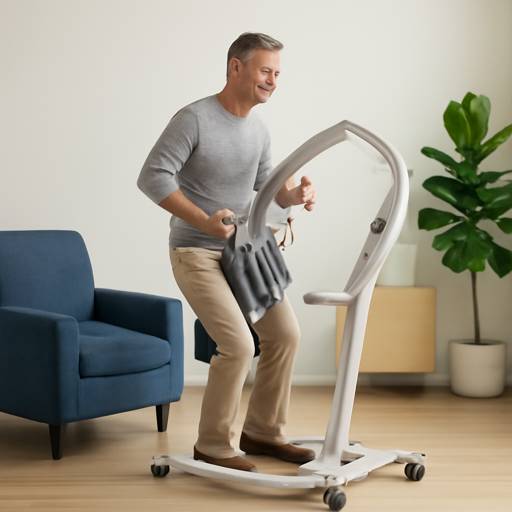
For millions of individuals recovering from surgery, managing chronic conditions, or navigating the challenges of aging, the simple act of standing up can become a monumental task. The transition from sitting to standing is not merely a physical movement; it is a fundamental step toward maintaining dignity, autonomy, and quality of life. When this motion becomes difficult due to weakness, pain, or instability, the risk of falls increases dramatically, and the burden on caregivers intensifies. This is where specialized equipment transforms the landscape of patient care. A sit to stand lift is a pivotal mobility aid designed to bridge the gap between full dependency and complete independence. Unlike a full-body sling lift, a sit-to-stand device is engineered for individuals who possess some weight-bearing capacity in their legs and have sufficient upper body strength to grip handles. These patients are not fully bedridden; they have the potential to stand but lack the core strength or stability to do so safely on their own. The lift provides a controlled, steady pivot, allowing the patient to engage their muscles while the machine manages the majority of the load. This active participation is critical for rehabilitation, as it helps maintain muscle tone, improves circulation, and reduces the psychological fear of falling. For caregivers, the ergonomic design eliminates the need for awkward, twisting lifts that frequently lead to back injuries. The result is a symbiotic relationship between human capability and mechanical assistance, creating an environment where safety and progress coexist. In healthcare facilities, these lifts are a standard for fall prevention protocols. In the home, they transform a caregiving nightmare into a manageable, dignified routine. The decision to acquire such equipment is a commitment to proactive health management, prioritizing long-term mobility over short-term convenience.
Clinical Efficacy and the Mechanics of Safe Patient Handling
The operational design of a modern sit-to-stand lift is a marvel of biomechanical engineering tailored to the natural rhythm of the human body. Understanding the mechanics behind the device is essential for anyone evaluating a sit to stand lift for sale. The process begins with the patient seated on the edge of a bed, chair, or wheelchair. The lift’s base is maneuvered under the bed or chair to cradle the patient’s feet securely on a stable footplate. The patient then leans forward, grasping the vertical handles or a padded chest support. As the hydraulic or electric actuator engages, the lift’s arm raises in a smooth, arcing motion that mirrors the natural momentum of standing up. This synchronization prevents the patient from being jerked upward, which can cause disorientation or strain. The key differentiator between a standard lift and a sit-to-stand model is the weight-bearing requirement. The patient must be able to support a portion of their own weight, typically around 50% or more, to use the device effectively. This makes the lift an active therapy tool rather than a passive transport device. Medical case studies consistently show that patients who use sit-to-stand lifts during rehabilitation recover ambulation skills faster than those lifted passively. One study involving post-operative hip replacement patients demonstrated that those transitioned using a sit-to-stand device had a 40% shorter hospital stay related to mobility goals. Furthermore, the design significantly mitigates the risk of shearing injuries, which occur when a patient’s skin is dragged across a surface during a transfer. The vertical lift path keeps the patient’s skin intact and reduces friction. From a biomechanical standpoint, the lift reduces the compressive load on the caregiver’s lumbar spine by nearly 95% compared to manual lifting. This is a staggering statistic that underscores the necessity of the equipment in professional care environments. The stability provided by the wide, locking base prevents tipping, even when the lift is in motion. Whether the unit uses a manual hand-crank or an electric motor, the core principle remains the same: optimizing leverage to make the natural act of standing safe, repeatable, and sustainable for both the patient and the caregiver.
Evaluating Features, Capacity, and Environmental Fit
Selecting the appropriate equipment requires a detailed assessment of both the patient’s physical condition and the environment in which the lift will operate. The market offers a range of options, from compact, portable units suitable for home use to heavy-duty models built for high-frequency turnover in acute care settings. The first and most critical factor is the weight capacity. Standard sit-to-stand lifts typically support patients up to 350 to 400 pounds, but bariatric models extend to over 600 pounds. Overlooking this parameter can lead to mechanical failure or serious injury. The next consideration is the type of sling or support attachment. Some units use a standard leg sling that wraps behind the thighs, while others offer a full vest-style support for patients with poor trunk control. These components must be targeted to the patient’s specific stability needs. Portability is another major variable. Models with large, lockable casters are excellent for institutional settings where the lift must move between rooms. For home use, a lighter, foldable frame that can be stored in a closet or transported in a car is often preferable. The power source is equally important. Battery-operated electric lifts offer the most freedom of movement, as they are not tethered to a wall outlet. However, manual hydraulic lifts are quieter, less expensive, and do not require battery maintenance, making them a reliable choice for backup or low-traffic environments. Battery life is a silent killer of workflow in busy facilities; a unit that dies mid-transfer is a safety hazard. Models with a "power down" feature, which allows the lift to descend slowly even without power, are a significant safety upgrade. When shopping for a device, one should also consider the base opening width. To properly surround a wheelchair, the base legs must spread wide enough to accommodate the chair’s wheels. Failure to do so renders the lift useless with certain furniture. Finally, the build quality of the frame—typically steel versus aluminum—affects longevity. Steel is heavier but more durable, while aluminum is lighter for travel. Matching these technical specifications to the specific care scenario is not just a purchase decision; it is a clinical evaluation that impacts daily safety.
Real-World Implementation: From Hospital Wards to Private Residences
The theoretical benefits of the equipment are best understood through the lens of practical application. Consider the case of a regional rehabilitation hospital in the Midwest that integrated a fleet of sit-to-stand lifts into their orthopedic wing. Prior to the change, staff reported an average of 14 reported "near-misses" per month involving patient falls during transfers. After implementing a standardized protocol using the lifts, that number dropped to zero over a six-month period. The impact was twofold: patient confidence soared, as they felt secure engaging their legs, and caregiver morale improved drastically because the physical toll of the work decreased. In another example, a home care agency in Florida equipped its visiting nurses with portable sit-to-stand units for clients with Parkinson’s disease. The nurses reported that the average time required to transfer a patient from a wheelchair to a toilet dropped from nearly 10 minutes of manual struggle to a controlled, 3-minute lift cycle. This efficiency gain allowed caregivers to spend more time on bathing, medication management, and emotional support.
For families managing care at home, the narrative is equally compelling. A daughter caring for her father after a spinal stenosis surgery described the device as "the difference between keeping him home and having to move him to a facility." Before acquiring the lift, she had to brace her back against the wall to manually pull him to his feet, a maneuver that was unsustainable and dangerous for both of them. The investment in a sit to stand lift for sale directly alleviated the immediate physical crisis. Furthermore, these devices are increasingly used in long-term care facilities for a specific sub-group of patients: those with dementia who are "sun-downing" or becoming agitated. The stability and predictability of the mechanical lift reduces the startle reflex that can occur when a human caregiver grabs a patient unexpectedly. The gradual, smooth motion is less intimidating, leading to fewer episodes of resistance. One facility noted a 30% reduction in the use of chemical restraints (sedatives) after implementing a sit-to-stand transfer protocol for agitated residents. This real-world evidence underscores that the purchase of this equipment is not merely a logistical acquisition but a therapeutic intervention that directly affects patient outcomes, caregiver longevity, and the overall atmosphere of care. It transforms a potentially dangerous confrontation into a cooperative, safe transition. The device becomes a silent partner in care, ensuring that every transfer is consistent, repeatable, and respectful of the patient’s physical boundaries.